
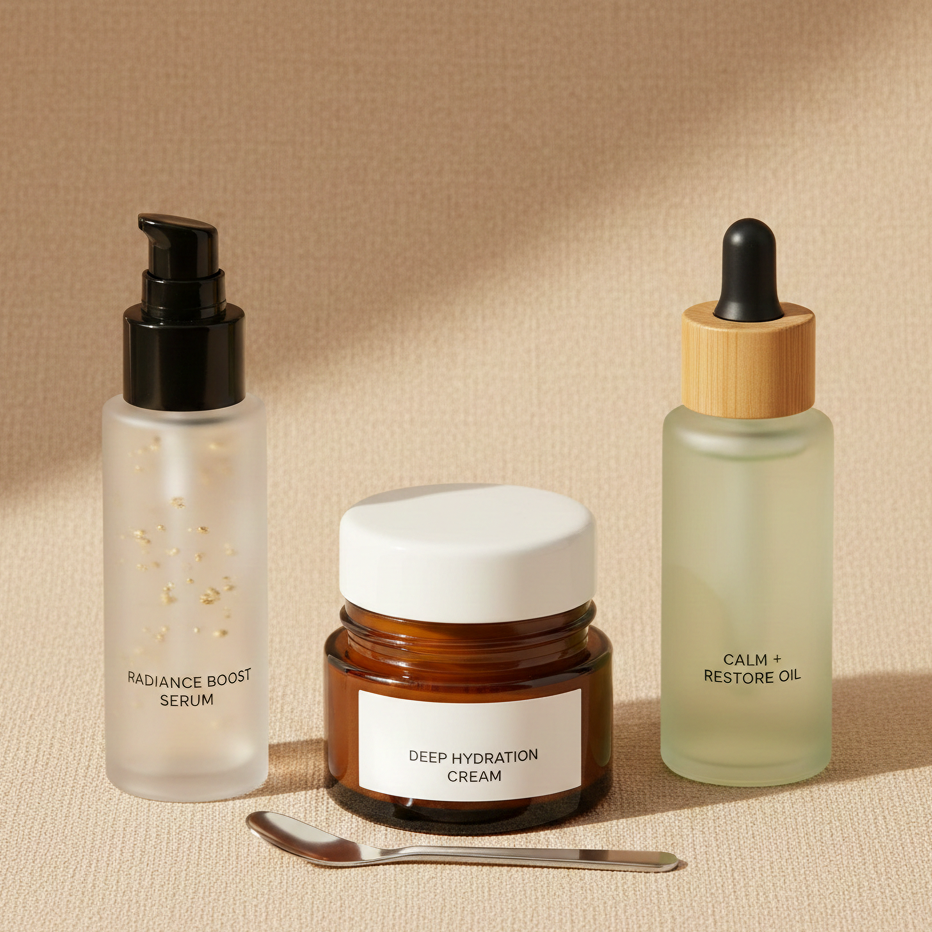
The Importance of Good Skincare
A consistent, high-quality skincare routine is the essential foundation that protects and enhances your aesthetic investment. While injectable treatments work beneath the surface to restore volume and soften lines, medical-grade topical products maintain the skin’s integrity by optimising texture, preventing chronic dryness, and keeping acne at bay. By prioritising active ingredients that support the skin barrier, you ensure your complexion remains vibrant and resilient, providing the healthiest possible canvas for your clinical treatments and ensuring your results look seamless between clinic visits.
A Guide to Skincare
All good skincare starts with a cleanser, moisturiser and SPF.

-
Acne requires a delicate balance between reducing sebum production without causing rebound oiliness.
Key Products
Niacinamide: regulates sebum production and reduces redness
Salicylic Acid: when used in a cleanser, will reduce inflammation and dissolves oil deep within pores
Retinoids: Use medical grade retinoid products to speed up cell turnover and help prevent acne scarring
Easy Tricks
Change your pillowcase every 2-5 days to reduce bacterial transfer when having breakouts.
-
Dullness is often caused by a buildup of dead skin cells and environmental oxidative stress. The goal is to chemically "unstick" those cells and brighten the overall skin tone for a healthy glow.
Key Products
Vitamin C (L-Ascorbic Acid): A potent antioxidant to protect against pollution and instantly brighten.
Glycolic Acid (AHA): Dissolves the "glue" between dead skin cells to reveal fresh skin.
Ferulic Acid: Often paired with Vitamin C to stabilise it and double the photoprotection.
Easy Tricks
Incorporate a 60-second facial massage during cleansing to boost lymphatic drainage and blood flow.
-
Dry skin lacks oil, while dehydrated skin lacks water. Both require "moisture magnets" to pull hydration into the skin and "sealants" to ensure it doesn't evaporate through Trans-Epidermal Water Loss (TEWL).
Key Products
Hyaluronic Acid: A water-absorbing molecule that can hold up to 1,000 times its weight in water.
Ceramides: Essential lipids that repair the skin’s natural protective barrier.
Glycerin: A reliable, non-irritating ingredient that draws moisture into the deeper layers.
Easy Tricks
Apply your serums onto slightly damp skin to "lock in" the moisture before it air-dries.
-
Oily skin is often misunderstood; over-cleansing can actually trigger more oil production. The strategy should be "lightweight hydration" combined with ingredients that refine the appearance of large pores.
Key Products:
Oil-Free Moisturisers: Look for "non-comedogenic" gel-based moisturisers and SPFs.
Zinc PCA: Helps to mattify the skin and reduce the appearance of shine throughout the day.
Easy Tricks
Avoid "squeaky clean" cleansers; if your skin feels tight after washing, your cleanser is too harsh and is damaging your barrier.
-
Rosacea-prone skin has a compromised barrier and reacts easily irritants. The focus must be on "calm and cool," using anti-inflammatory ingredients that reduce vascular flushing.
Key Products:
Azelaic Acid: A powerhouse for rosacea that reduces redness and bumps while being very gentle.
Antibiotics: In moderate to severe cases, prolonged antibiotic courses are prescribed by your doctor to reduce bacterial infection and calm inflammation.
Easy Tricks
Wash your face with lukewarm water only—excessively hot or cold water can trigger a flushing flare-up. In a similar vein, avoid saunas, red-light masks and exposure to cold weather when the skin is feeling sensitive.
-
Whether it’s melasma or sunspots, hyperpigmentation is caused by overactive melanocytes. Treatment requires "tyrosinase inhibitors" (to stop pigment production) and diligent sun protection to prevent it from returning.
Key Products:
Hydroquinone: A tyrosine kinase inhibitor, that reduces melanin production.
Tranexamic Acid: Particularly effective for stubborn hormonal pigmentation like melasma.
Broad-Spectrum SPF 50: Pigment will always return if the skin is not shielded from UV rays.
Easy Tricks
Always wear SPF as part of your routine, heat as well as sunlight can cause pigment production!